

In today’s fast-paced digital world, text abbreviations like STSU pop up in conversations across Instagram, Snapchat, TikTok, and group chats almost daily. If you’ve received a message with “STSU” and felt confused about what it means, you’re not alone. Internet slang evolves rapidly, and keeping up with these shortcuts can feel overwhelming.
This comprehensive guide breaks down the STSU meaning in text, explores where it’s used, shows real-life examples, and teaches you when and how to use it naturally in your own messages. By the end, you’ll understand this popular texting abbreviation with complete confidence.
What Does STSU Mean in Text?
STSU primarily stands for “Shut The Stuff Up” a softened, censored version of a more direct expression people use in casual conversation. It’s internet slang designed to communicate quickly without typing lengthy sentences.
The key point: STSU isn’t always harsh or rude. Instead, it’s usually lighthearted and playful, depending on the conversation’s tone and context. A friend might use “STSU 😂” to express shock or disbelief after hearing something wild, while someone else might use it sarcastically or to show mild annoyance. The true meaning depends entirely on how it’s delivered.
Other Interpretations of STSU
While “Shut The Stuff Up” dominates, different online communities occasionally use STSU for other meanings:
- Send That Same Update — Used in work or professional chats to ask someone to resend information
- Stay True, Stay Unique — Motivational or inspirational context on social media
- See That Snap Update — Informal conversations among friends on Snapchat
- Send To Someone Urgently — In group chats when quick action or response is needed
- Stick To Something — Encouragement to stay consistent or focused on goals
Context is king when interpreting STSU. Always look at surrounding words, emojis, and your relationship with the sender before deciding what they mean.
Where Is STSU Used?
STSU appears across nearly every digital communication platform popular with Gen Z and younger users. Understanding where it shows up helps you recognize its context better.
STSU Meaning on Instagram
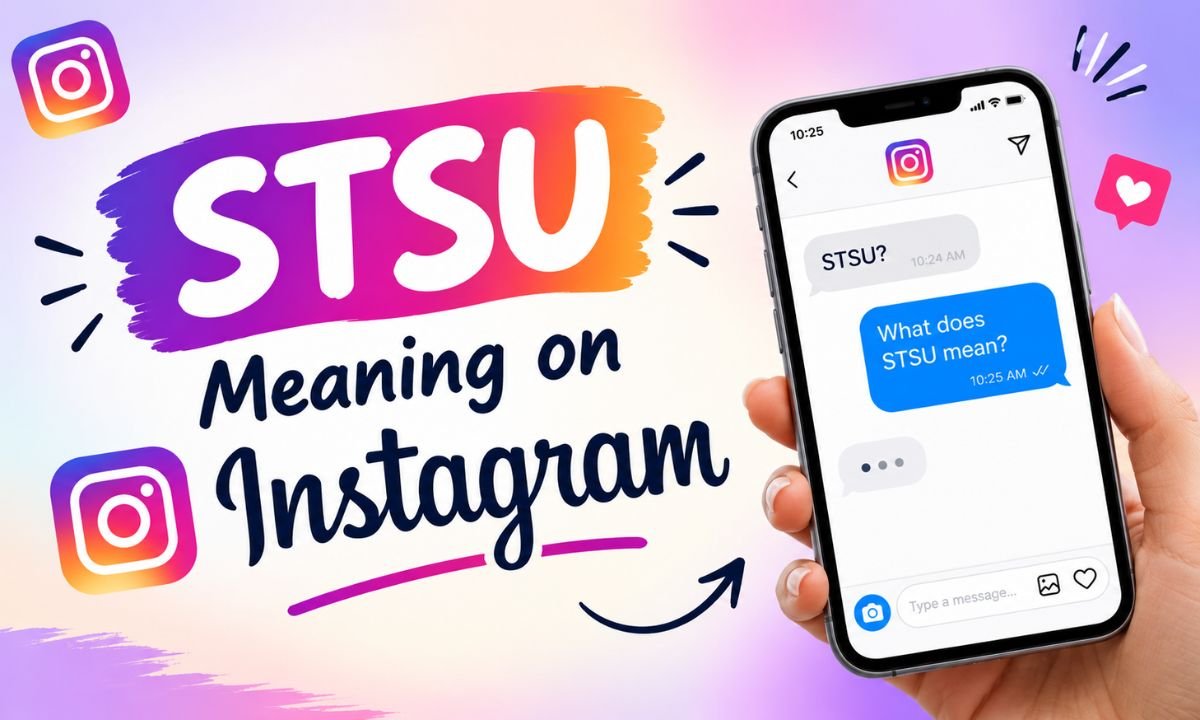
On Instagram, STSU typically appears in comments, direct messages, and replies. Users drop “STSU” when responding to shocking posts, funny captions, or surprising news from friends.
Common Instagram scenarios:
- Commenting on a friend’s post about unexpected life news
- Reacting to a meme that’s hilarious or absurd
- DMing back and forth during casual conversations
- Replying to stories with dramatic or surprising content
The casual nature of Instagram encourages playful STSU usage. Paired with laughing emojis or “💀” (dying), it signals fun and humor rather than genuine annoyance.
What Does STSU Mean on Snapchat?
Snapchat is where informal, rapid-fire texting thrives, making STSU a natural fit. People use STSU in snaps, chats, and caption replies when responding quickly to friends.
On Snapchat specifically:
- STSU often expresses shock at a friend’s story or news
- It’s frequently used jokingly between close friends who understand the playful tone
- The disappearing message format makes casual slang feel even more natural
- Emojis and tone carry extra weight since context disappears quickly
Snapchat’s ephemeral nature means STSU feels low-stakes and fun—perfect for the platform’s casual vibe.
What Does STSU Mean on Roblox?
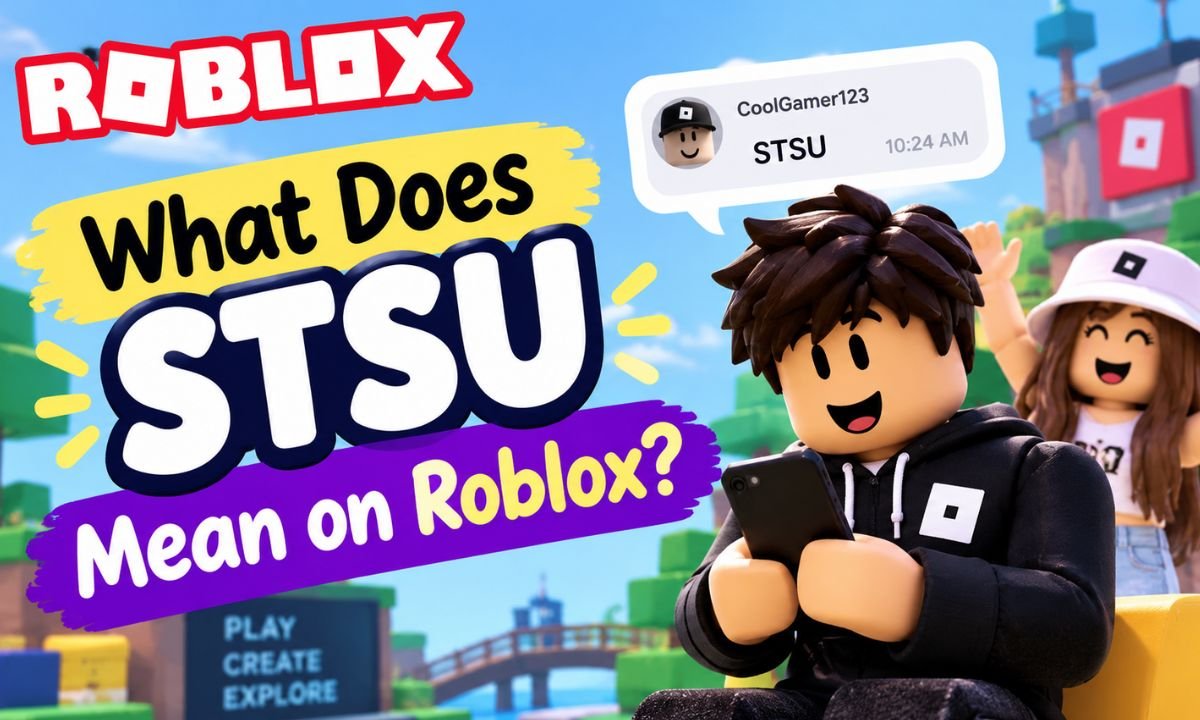
In Roblox game chats, STSU takes on a slightly different role. Players use it while gaming to react to surprising in-game moments, funny player actions, or unexpected game events.
Roblox context for STSU:
- Reacting to someone’s unexpected game strategy
- Expressing surprise when a player does something hilarious
- Quick responses during fast-paced gameplay
- General fun banter between teammates
Gaming communities tend to use text abbreviations extensively, making STSU fit naturally into Roblox conversations.
What Does STSU Mean From a Girl or a Guy?
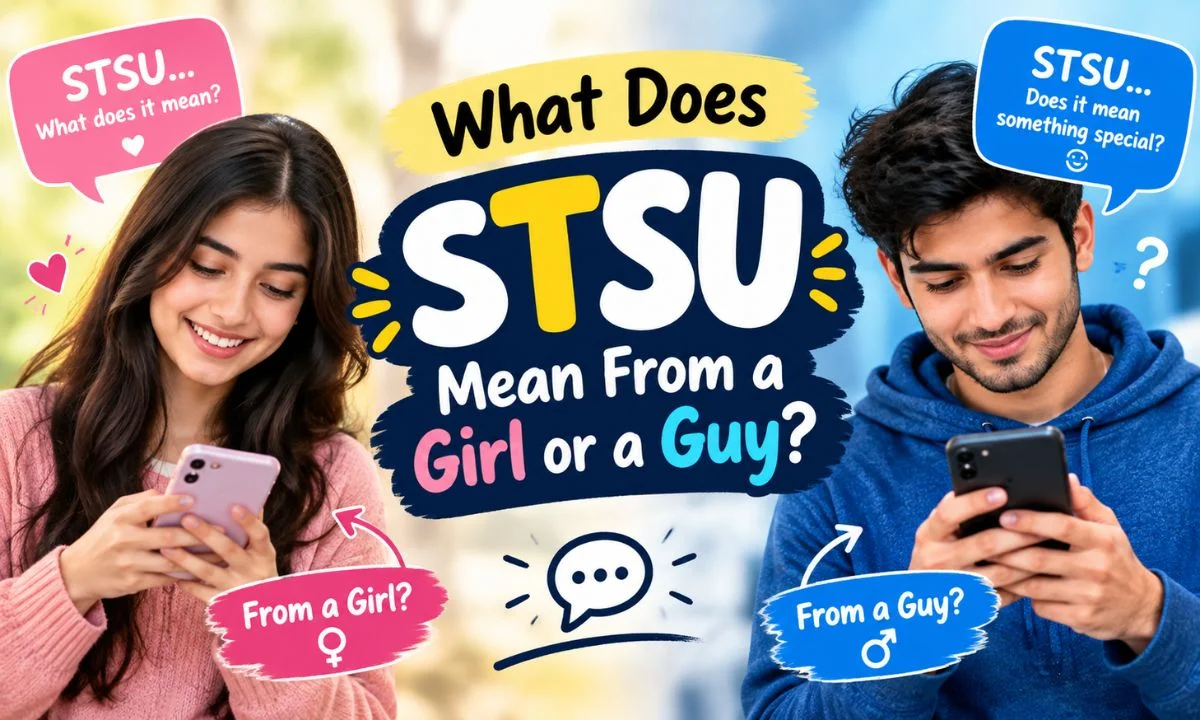
The sender’s gender doesn’t change STSU’s meaning context and tone matter far more. However, different communication styles might affect how it’s perceived.
| Scenario | Girl’s Usage | Guy’s Usage |
| With Close Friend | Playful teasing, surprise, or excitement | Joking around, playful challenge, sarcasm |
| With Acquaintance | Might sound slightly more dismissive | Could come across as more direct |
| In Romantic Context | Usually playful, rarely genuinely annoyed | Could be teasing or sarcastic humor |
| During Disagreement | Might soften frustration with humor | Could express genuine irritation |
Important reminder: Don’t assume rudeness based on gender. Relationship history, inside jokes, and overall communication style matter infinitely more than whether a guy or girl sent the message.
STSU Meaning in Different Texting Situations
STSU’s true meaning shifts based on the specific situation. Let’s break down the most common scenarios:
When Someone Is Joking
In playful banter, STSU means “I can’t believe you just said/did that!” or “That’s hilarious!” It’s lighthearted teasing between friends who know each other well.
Example:
- Friend: “I accidentally wore my shirt inside out to school all day”
- You: “STSU 😂😂😂”
Here, STSU expresses shock mixed with humor you’re not genuinely angry; you’re laughing at the situation.
When Someone Is Annoyed
When someone’s annoyed, STSU becomes a mild expression of frustration. It’s still not aggressive, but the sender clearly wants the conversation to shift or the topic to end.
Example:
- Friend keeps bringing up the same topic repeatedly
- You: “STSU already 😤”
The emoji choice (😤 instead of 😂) signals genuine frustration rather than humor.
When Someone Is Being Sarcastic
Sarcastic STSU flips the message’s meaning. The sender doesn’t literally want you to stop talking—they’re mocking something you said or using dry humor.
Example:
- You: “I’m the best player in this game”
- Friend: “STSU 🙄”
The eye-roll emoji signals sarcasm rather than genuine annoyance.
Examples of STSU in Text Messages
Seeing STSU in action helps you understand how it flows naturally in real conversations:
Example 1 (Surprise/Excitement):
A: “I got accepted to my dream college!”
B: “STSU!! Congratulations!! 🎉🎉”
Example 2 (Playful Teasing):
A: “I just fell up the stairs in front of the whole class”
B: “STSU 💀 that’s the funniest thing I’ve heard today”
Example 3 (Sarcasm/Disbelief):
A: “My teacher said the homework is optional”
B: “STSU, there’s no way 😂”
Example 4 (Mild Frustration):
A: “Can I vent about my ex again?”
B: “Seriously, STSU. We’ve been over this 10 times already.”
Example 5 (Supportive Encouragement):
A: “Should I keep trying or give up?”
B: “Keep going. STSU and stay focused fr”
How to Use STSU Naturally
Using STSU correctly means knowing when it fits and when it doesn’t. Here’s practical guidance:
When to Use STSU
✅ Do use STSU when:
- You’re texting close friends or people you know well
- The conversation is casual and lighthearted
- You’re reacting to something surprising or funny
- Everyone in the group chat uses similar slang
- You want to keep messages short and punchy
- The tone matches playful humor or mild annoyance
When Not to Use STSU
❌ Don’t use STSU when:
- Texting your parents, teachers, or professional contacts
- Having serious conversations about important topics
- You’re genuinely upset or angry
- The other person doesn’t understand internet slang
- Written communication (emails, formal messages)
- You’re unsure about the recipient’s humor style
- The situation calls for mature, respectful communication
Pro tip: When in doubt, choose clarity over slang. It’s always better to write a complete sentence than risk being misunderstood.
Is STSU Rude or Offensive?
STSU occupies a gray area. It can sound rude, but it usually isn’t intended that way. Context determines whether it crosses the line.
STSU is generally NOT rude when:
- Used between friends as playful teasing
- Paired with laughing emojis
- Expressing shock or disbelief, not actual anger
- Following lighthearted conversation
STSU becomes rude when:
- Used during genuine arguments
- Directed at someone who doesn’t appreciate sarcasm
- Paired with angry emojis or aggressive tone
- Used repeatedly to dismiss someone’s feelings
- Sent to people who feel hurt or excluded by slang
Bottom line: STSU’s rudeness depends entirely on delivery and relationship. The same message can be hilarious between best friends and hurtful to someone who doesn’t know you well.
STSU vs Similar Texting Slang
Understanding how STSU compares to similar abbreviations helps you choose the right phrase for each situation.
STSU vs STFU
| Aspect | STSU | STFU |
| Meaning | Shut The Stuff Up | Shut The [Expletive] Up |
| Tone | Playful, censored, lighter | More direct, stronger language |
| Use Cases | Casual friends, social media | Close friends only, very informal |
| Appropriateness | Slightly safer for mixed groups | Better saved for very close circles |
| Offense Level | Mild to moderate | Moderate to high |
STSU functions as the “softer” version, making it safer for broader audiences.
Read Also This: Calloway Meaning in Slang: Definition, Uses & Examples
STSU vs STHU
STHU stands for “Shut The Heck Up” another softened alternative to strong expressions.
- STSU feels more modern and Gen Z–influenced
- STHU appears in older internet communities
- Both serve similar purposes but differ in how current they sound
- STSU dominates on platforms like TikTok and Instagram, while STHU survives in forums
STSU vs SWU
SWU means “See What You Did?” entirely different purpose and tone.
- STSU tells someone to stop talking
- SWU calls attention to someone’s action or words
- SWU is accusatory; STSU is reactive
- They serve opposite functions in conversation
What Does SU Mean in Gen Z Slang?
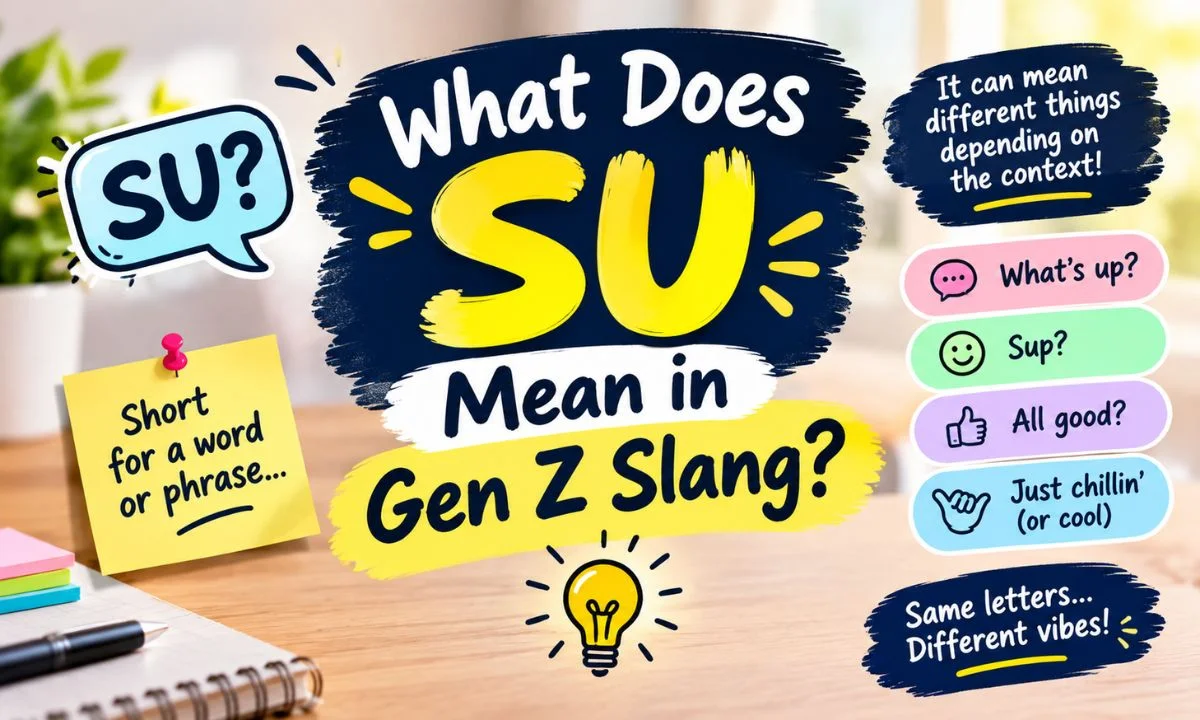
SU is a standalone abbreviation meaning “Shut Up” or sometimes “See You.”
- SU alone is shorter and more blunt
- STSU adds “The Stuff” for flavor and humor
- SU works best in casual texts between very close friends
- SU is older slang; STSU feels more current
Why Do People Use STSU in Texting?
Understanding why people choose STSU reveals how modern communication works:
- Speed and Efficiency — Typing “STSU” beats typing a full sentence when expressing quick reactions
- Emotional Expression — Acronyms communicate tone and feeling instantly without lengthy explanation
- Community and Belonging — Using shared slang creates bonds between friends and age groups
- Platform Culture — TikTok, Snapchat, and Instagram reward casual, quick communication
- Humor and Personality — Slang adds personality and humor that formal writing lacks
- Generational Identity — Gen Z uses specific abbreviations to identify with their peer group
Essentially, STSU exists because modern texting prioritizes speed, personality, and connection over formality.
Frequently Asked Questions About STSU
Is STSU rude in a text?
It depends on context and tone. STSU can be playful and funny between friends or sound rude and dismissive if used during arguments. Emojis matter 😂 signals humor, while 😤 signals frustration.
Is STSU the same as STFU?
No. STSU is a softer, censored version. STFU uses stronger language and comes across more directly aggressive. STSU works in broader social contexts than STFU.
Can adults use STSU in texts?
Yes, adults can use STSU with friends and family who understand casual slang. However, it’s better avoided in professional settings, formal communication, or with people unfamiliar with internet abbreviations.
Is STSU used sarcastically?
Frequently. STSU often appears sarcastically to mock or playfully challenge what someone said rather than literally telling them to be quiet. Context and emojis reveal the sarcasm.
Does capitalization matter with STSU?
Not really. “stsu,” “STSU,” and “Stsu” all mean the same thing. Lowercase feels more casual; all caps can emphasize emotion. Choose based on overall message tone.
What age groups use STSU?
STSU dominates among Gen Z (ages 13–25) but also appears in younger millennial conversations. It’s least common among adults over 35, who may not recognize the abbreviation.
Final Thoughts on STSU Meaning in Text
STSU represents modern digital communication perfectly it’s quick, expressive, and creates community through shared understanding. While it carries a mild edge, context transforms it from rude to hilarious within seconds.
Key takeaways:
- STSU primarily means “Shut The Stuff Up”—a softened, playful abbreviation
- Context, emojis, and relationship determine true meaning
- Use it casually with friends; avoid it professionally
- Different platforms show different STSU usage patterns
- When uncertain, ask the sender directly rather than assuming
Internet slang will keep evolving, and new abbreviations will emerge constantly. But understanding how people use terms like STSU helps you navigate digital conversations with confidence and humor. Whether you’re texting on WhatsApp, commenting on Instagram, or chatting on Snapchat, knowing what STSU means keeps you connected to how people actually communicate today.
Stay curious, stay connected, and don’t worry you’ve got this! 😊
