

Have you ever seen “TTS” in a text message, TikTok comment, or Instagram DM and wondered what it means? You’re not alone! This abbreviation confuses millions of people every day because it can mean different things depending on where you see it.
TTS most commonly stands for “Text-to-Speech,” a technology that converts written words into spoken audio. You hear it when TikTok videos have automated narration, when your phone reads messages aloud, or when content creators use digital voices instead of recording themselves. But sometimes, TTS can also mean “Talk To You Soon” in casual texting or have other meanings in specialized fields.
Understanding TTS is important because it’s everywhere online now. Whether you’re scrolling through social media, creating content, using accessibility features, or just chatting with friends, knowing what TTS means helps you communicate better and avoid confusion.
In this guide, we’ll cover:
- What TTS really means
- How it’s used on TikTok, Instagram, Discord, and other platforms
- Real conversation examples
- How to respond when someone says TTS
- Common misunderstandings people have
By the end, you’ll be an expert on TTS and understand this modern internet abbreviation like a pro. Let’s dive in!
Quick Answer: What Does TTS Mean?
TTS most commonly stands for “Text-to-Speech,” a technology that converts written words into spoken audio using synthesized voices. However, depending on context, it can also mean “Talk To You Soon” or have specialized meanings in different fields. In modern digital communication, the Text-to-Speech definition dominates across social platforms, accessibility tools, and content creation spaces.
What Does TTS Actually Mean?
Text-to-Speech (TTS) is a form of assistive technology that uses artificial intelligence and natural language processing to transform written text into audible speech. When you use TTS, a digital voice reads your words aloud instead of you manually recording or reading the message yourself.
This technology has been around for decades in computer science, but it’s become incredibly popular recently due to improvements in AI voice quality. Today, millions of people interact with TTS daily through:
- Mobile devices and apps
- Video content platforms
- Accessibility features
- Social media platforms
- Gaming applications
- Virtual assistants and smart speakers
The synthesized voices now sound remarkably natural, making TTS a practical tool for both accessibility needs and creative content production.
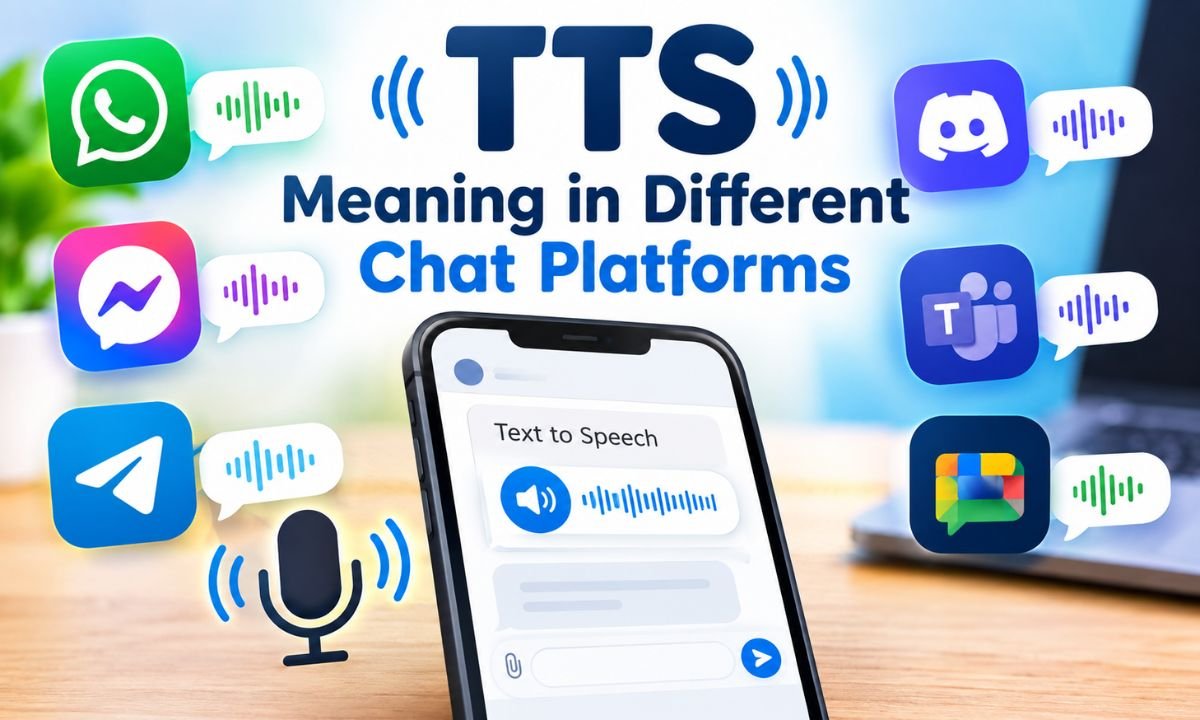
TTS Meaning in Different Chat Platforms
What Does TTS Mean on TikTok?
On TikTok, TTS primarily refers to the automated voice feature that reads text aloud in videos. Creators use this feature to narrate content without recording their own voice. The platform offers multiple voice options, and many viral videos feature these distinctive computer-generated narrations.
Why TikTok creators love TTS:
- No need to record voice personally
- Consistent and professional-sounding narration
- Multiple voice options available
- Creates humorous or dramatic effects
- Helps maintain anonymity while creating
TTS on Instagram and Reels
Instagram implements TTS through voice filters in Stories and automated narration in Reels. When creators add text to their videos and enable the TTS feature, Instagram converts that text into spoken audio using synthesized voices. This accessibility feature also helps creators reach wider audiences and makes content more engaging.
TTS in Discord, WhatsApp & Snapchat
- Discord: TTS allows messages to be read aloud in voice channels, useful for hands-free communication
- WhatsApp: The abbreviation might refer to the app’s voice message feature or simply mean “Text-to-Speech”
- Snapchat: TTS refers to voice filters that read text elements in Stories aloud
TTS in Gaming Communities
In gaming contexts, TTS serves multiple purposes:
- Reading in-game chat messages aloud
- Providing voice narration for streaming content
- Enabling accessibility for hearing-impaired players
- Creating entertaining content for livestreams on Twitch or YouTube
Read Also This: SN Meaning in Text: What Does “SN” Mean in Chat & Social Media?
How People Actually Use TTS in Text Messages
Here’s how TTS appears in real conversations:
| Context | Example | Meaning |
|---|---|---|
| Video creation | “I used TTS for the narration instead of recording my voice” | Text-to-Speech technology for automated voice |
| Accessibility discussion | “TTS helps me understand long documents better” | Text-to-Speech as an accessibility feature |
| Content creation | “Which TTS voice sounds most natural for tutorials?” | Asking about speech synthesis quality |
| Casual texting | “TTS, I’ll call you tomorrow” | Talk To You Soon (context-dependent) |
| Social media | “The TTS in this video is hilarious” | Referring to automated voice narration |
TTS Examples in Real Conversations
Scenario 1: Video Creator asking for advice
- Person A: “How did you add narration to your YouTube video?”
- Person B: “I used TTS with one of the AI voices from the editing software.”
- Translation: They used Text-to-Speech technology instead of recording themselves
Scenario 2: Accessibility discussion
- Person A: “Do you use TTS when reading long emails?”
- Person B: “Yes, it helps me multitask while understanding the content.”
- Translation: They’re discussing Text-to-Speech as an accessibility tool
Scenario 3: Casual texting
- Person A: “Hey, busy right now but TTS!”
- Person B: “Cool, talk soon!”
- Translation: “Talk To You Soon” in informal texting (meaning depends on context)
Scenario 4: Social media comment
- Comment: “The TTS voice in this TikTok is actually so good 😂”
- Meaning: The automated voice narration used in the TikTok video sounds natural or funny
TTS vs. Other Communication Methods: Key Differences
Understanding how TTS differs from related technologies helps clarify its purpose:
| Feature | TTS (Text-to-Speech) | STT (Speech-to-Text) | Voice Messages | Voice Calls |
|---|---|---|---|---|
| What it does | Converts text → audio | Converts audio → text | Records real human voice | Direct live conversation |
| Recording needed | No | No | Yes | Yes |
| Technology | AI speech synthesis | Speech recognition | Manual recording | Real-time communication |
| Use case | Reading documents aloud | Transcribing audio | Personal messages | Immediate communication |
| Sound | Synthesized/computer-generated | Depends on source | Natural human voice | Natural human voice |
| Popular on | TikTok, accessibility apps, YouTube | Transcription services, Zoom | WhatsApp, Telegram | Phone calls, video chats |
Alternative Meanings of TTS in Specialized Contexts
While Text-to-Speech dominates casual communication, TTS can mean different things depending on industry and context:
Professional & Technical Uses
- Aviation: Time To Station (aircraft communications)
- Medical: Takotsubo Syndrome (a heart condition)
- Physics: Time-Temperature Superposition (materials science)
- Business: Talk To Sell or Time To Sync (organizational contexts)
Casual Chat Alternatives
- Talk To You Soon: Common in informal texting
- Time To Sleep: Used when signing off for bed
- Talk To Someone: Suggesting communication with another person
- That’s Tough, Sorry: Expressing sympathy in casual conversation
How to Respond When Someone Says TTS
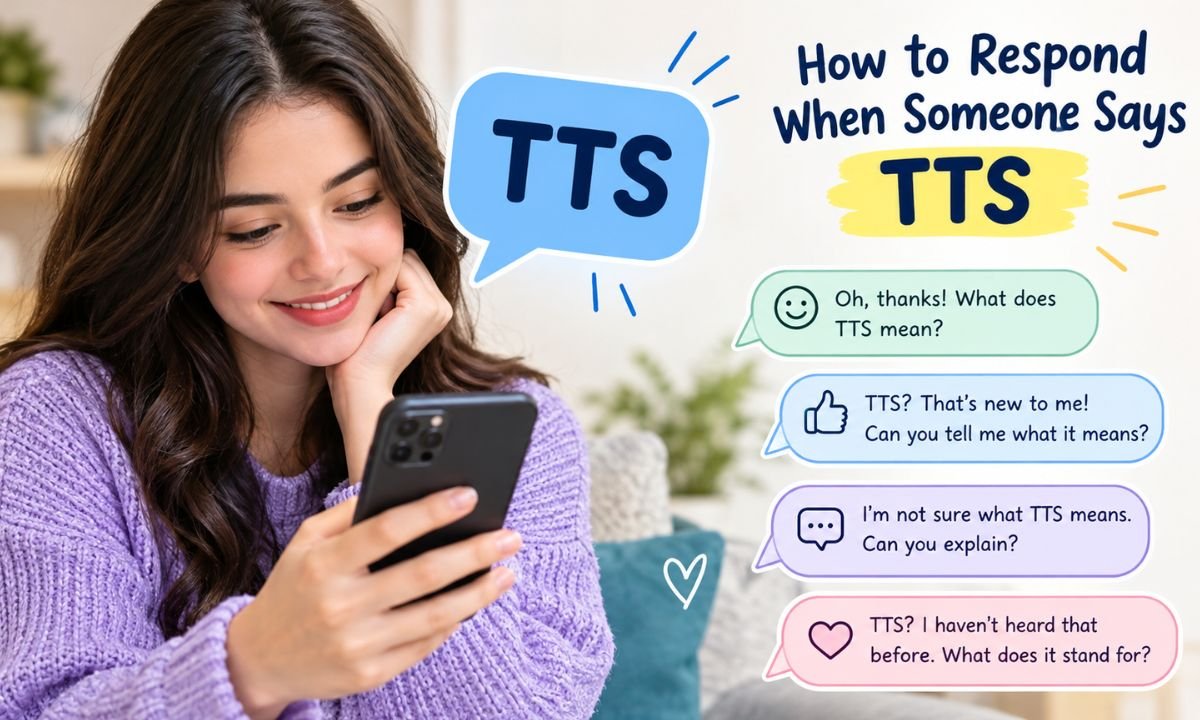
Your response should match the context. Here are natural ways to reply:
If they’re using TTS for technical purposes:
- “Sure, I’ll check the TTS version.”
- “Which TTS voice do you prefer?”
- “I’ll send you the TTS file.”
If it’s a casual sign-off (“Talk To You Soon”):
- “Sounds good, TTS!”
- “Cool, talk later!”
- “Sure thing!”
If it’s related to content creation:
- “That TTS narration sounds great!”
- “Does this platform have better TTS options?”
If the meaning is unclear:
- Simply ask: “What do you mean by TTS in this context?”
- Most people appreciate direct clarification
Is TTS Slang or an Official Abbreviation?
TTS is primarily an official technical abbreviation rather than slang. It originated in computer science and accessibility communities as shorthand for Text-to-Speech technology. However, it has evolved into both:
- Official term: Used in software documentation, accessibility guidelines, and technical discussions
- Casual abbreviation: Used in texting and social media for brevity and convenience
- Context-dependent: Can function as slang in informal chats while maintaining technical meaning in professional settings
The distinction matters because TTS has legitimate meaning in technology while also serving as casual shorthand in everyday communication.
Read More: Calloway Meaning in Slang: Definition, Uses & Examples
Common Misunderstandings About TTS
Misunderstanding #1: “TTS is only used on TikTok”
Reality: TTS appears across Discord, Instagram, WhatsApp, YouTube, accessibility tools, gaming platforms, and professional applications. TikTok popularized it, but it’s used everywhere online.
Misunderstanding #2: “TTS means the same thing everywhere”
Reality: Context determines meaning. The same abbreviation can mean Text-to-Speech in a tech discussion and Talk To You Soon in casual texting.
Misunderstanding #3: “TTS is unprofessional to use”
Reality: TTS is perfectly professional in appropriate contexts. Use it freely in tech discussions, accessibility conversations, or casual workplace chats, but avoid it in formal emails or official documentation.
Misunderstanding #4: “Using TTS means someone is being lazy”
Reality: TTS serves legitimate purposes including accessibility, content creation efficiency, and multitasking. Using it is a practical choice, not laziness.
Misunderstanding #5: “All TTS voices sound robotic”
Reality: Modern AI-generated voices sound remarkably natural. Older TTS systems sounded robotic, but current technology has made significant improvements in voice quality and naturalness.
Why TTS Has Become So Popular
Several factors explain TTS’s explosion in popularity:
- Social Media Growth: Platforms like TikTok, Instagram, and YouTube Shorts made automated narration trendy
- Improved AI: Better voice synthesis technology created more natural-sounding audio
- Content Creation: Creators discovered they could produce videos faster without recording themselves
- Accessibility Movement: Increased awareness of accessibility features benefited text-to-speech adoption
- Mobile Convenience: Smartphones integrated TTS features, making them accessible to everyone
- Cost-Effective: TTS removes the need for expensive voice actors or professional recording equipment
Frequently Asked Questions
What does TTS mean in text messages?
It usually means Text-to-Speech, referring to technology that converts written text into spoken audio. Context determines if it means something else.
What does TTS mean on TikTok?
On TikTok, TTS refers to the automated voice feature that reads text aloud in videos, commonly used for narration and entertainment.
Is TTS internet slang?
TTS is primarily a technical abbreviation that’s evolved into casual communication. It’s not pure slang but used informally in texting.
Does TTS always mean text-to-speech?
No, it can mean “Talk To You Soon” in casual texting or have specialized meanings in medical, aviation, or other professional fields. Context matters.
How do you use TTS in a sentence?
Example: “I used TTS to narrate my YouTube video instead of recording my voice.” Or casually: “TTS, I’ll text you later!”
What does TTS mean in social media?
On social platforms, TTS usually means Text-to-Speech, particularly when discussing automated voice features in videos, Reels, or Stories.
Is TTS rude or offensive?
No, TTS is a neutral technology term used descriptively. It’s appropriate in most contexts and isn’t considered rude.
Can TTS help with accessibility?
Yes, TTS is a crucial accessibility feature for people with visual impairments, dyslexia, or reading difficulties. It allows equal access to text-based content.
Final Thoughts
Understanding TTS in modern digital communication opens doors to better comprehension of how people interact online. Whether it’s recognizing automated narration in a TikTok video, using text-to-speech for accessibility, or simply understanding a friend’s casual “TTS” sign-off, context is your best guide.
The technology behind TTS continues improving, making synthesized voices increasingly natural and useful. As more platforms integrate voice features and AI continues advancing, familiarity with TTS becomes even more valuable for anyone engaging in digital communication.
The next time you encounter TTS in a text, social media comment, or video, you’ll know exactly what it means and whether the conversation is about technology, accessibility, or just a casual way to end a chat. That’s the power of understanding modern internet abbreviations in context.
Raed More: What Does Emphasize Mean? Definition, Examples & Easy Explanation
