
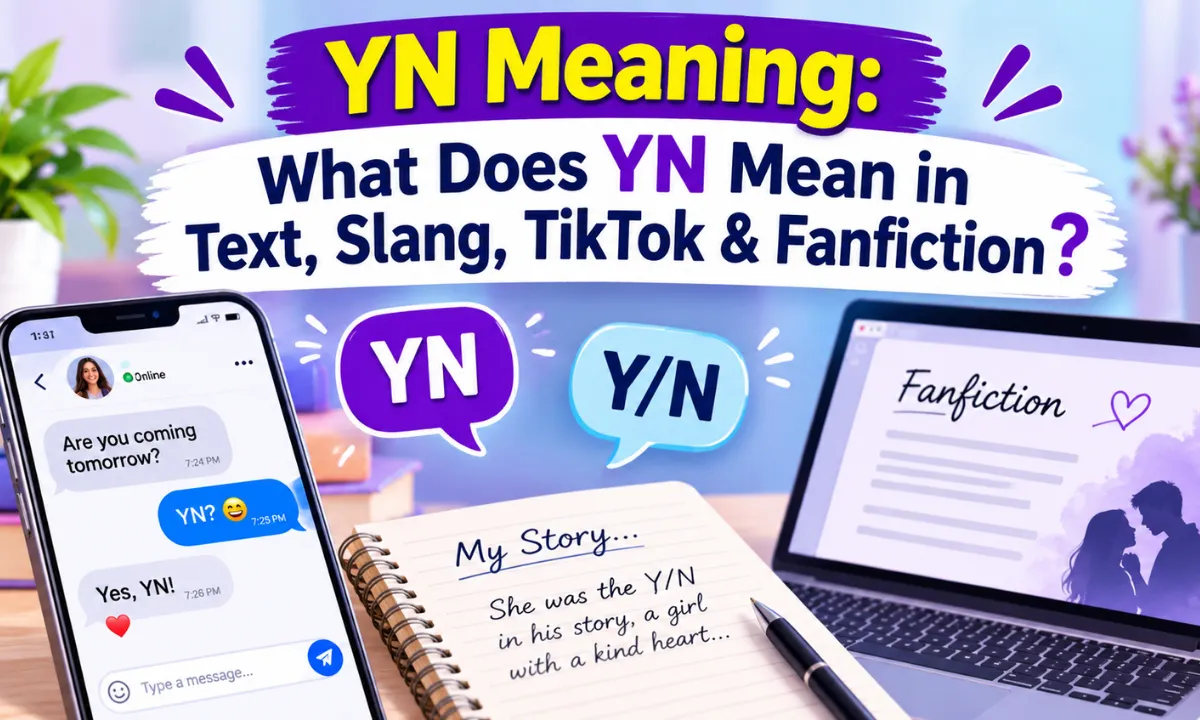

YN stands for “your name.” It is a placeholder used in texts, social media posts, and stories, where the reader is supposed to picture their own name in that spot. You will also see it written as Y/N, y n, or Y.N, and all of them mean the same thing.
If you landed here after seeing it in a comment, a caption, or a story, you are not alone. The meaning is simple, but it shifts a little depending on where you spot it. Below, you will find how it works in slang, fanfiction, and on social platforms, plus easy examples so you can tell what someone really means.
What Does YN Mean in Text and Slang?
In everyday slang, YN means “your name.” It is a stand in for whoever is reading. Instead of writing a real name, the writer types YN so that any reader can imagine themselves in the sentence.
That is why what does yn stand for has such a short answer: Your Name. When someone asks what’s a yn, they are really asking about the person the story or caption is talking to. The “YN” is you, the reader.
You might also run into YN YN. There is no separate official meaning for it. People usually repeat it for a joke, for emphasis, or just because they like the sound of it. If a message with YN YN confuses you, the safest move is to ask the sender what they meant. Read More: YK Meaning in Text
What Does Y/N Mean in Fanfiction and Reader Insert Stories?

Y/N is most famous in fanfiction, especially in stories called reader inserts. In these stories, the main character has no fixed name. Writers type Y/N wherever the name would go, so the reader can step into the role and feel like the story is happening to them.
Here is a quick example: “Harry smiled when Y/N walked into the room.” A reader named Maya would imagine it as “Harry smiled when Maya walked into the room.” This idea is part of a wider style known as self insert fiction, where the audience pictures themselves inside the story.
Writers often build on the same idea with other placeholders too, like Y/L/N for your last name, Y/H/C for your hair color, and Y/E/C for your eye color. They all work the same way. The letters stand for something personal that the reader fills in mentally.
YN vs Y/N vs POV: What Is the Difference?
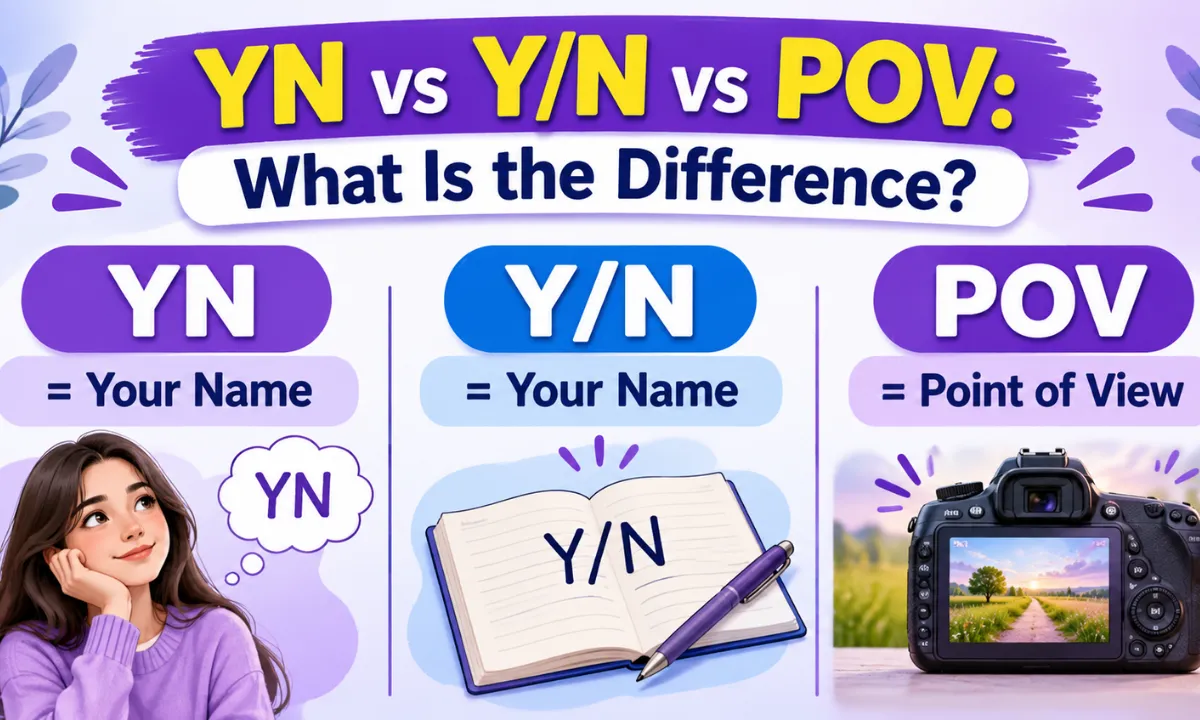
These three terms often show up together, so they are easy to mix up. YN and Y/N are really the same placeholder, just typed in two styles. POV is a different thing. It stands for “point of view” and describes the angle the content is told from.
Read Also This: What Does YH Mean in Text?
Here is a simple way to compare them:
| Term | What it means | Where you see it |
| YN | Your name, a placeholder for the reader | Texts, comments, captions |
| Y/N | Same as YN, with a slash | Fanfiction, stories, edits |
| POV | Point of view, the perspective of the scene | TikTok and Instagram videos, captions |
A caption like “POV: Y/N just got the best news of the day” uses both. POV sets the scene, and Y/N tells you that the viewer is the one in it.
How YN Is Used on TikTok, Instagram, and Other Platforms

On social media, YN carries the same meaning but gets used in more playful ways. Creators use it to make viewers feel like part of the video, and fans use it in comments, edits, and short stories. The tone is usually light and fun.
TikTok
TikTok is where Y/N spread the most. Many videos use text on screen like “POV: you are Y/N and your celebrity crush just texted you.” Fan edits, voiceovers, and short story videos use it too, and some creators make jokes about how dramatic Y/N stories can get.
On Instagram, YN shows up in Reels captions, story text, and comment sections. A fan might comment “Y/N is so lucky” under a video of a favorite singer, as a joke about the imaginary person in the scene.
Other Platforms
On Wattpad, Archive of Our Own, and Tumblr, Y/N has been part of reader insert writing for years. In group chats and on X, you may see it used more as an inside joke or a meme than in real fiction.
Examples of YN in Texts and Social Media Conversations
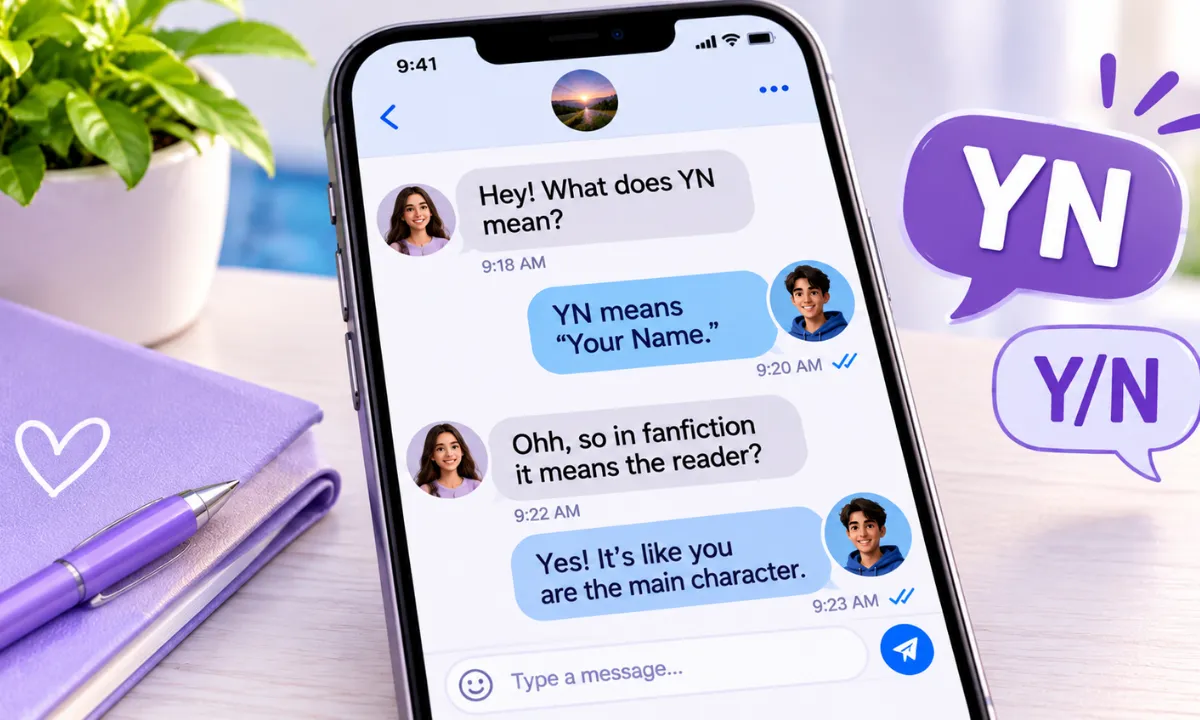
Seeing real examples is the easiest way to understand it. Here are a few short chats that show how the meaning changes with context.
Fanfiction chat:
Sam: Did you read the new chapter?
Priya: Yes! Y/N finally told him the truth. I loved it.
Here, Y/N is the story’s main character, the reader stand in.
TikTok comment section:
Comment: POV: you are Y/N and he just waved at you
Reply: Y/N, I can’t breathe 😭
Both people are joking along as if they are the character.
Friends texting:
Zoe: What does yn mean in this caption?
Ben: It’s just “your name.” They want you to imagine yourself in the video.
This is the plain, everyday meaning. One friend simply explains the slang to the other.
Is YN Rude, Offensive, or Neutral?
YN is neutral. It is not a rude word, an insult, or a slang term with a hidden bad meaning. It is just a placeholder, and most people use it in a friendly or playful way.
That said, some people find Y/N stories or jokes a bit cringe, and online humor sometimes pokes fun at them. That is about taste, not about the term being offensive. As with any slang, it is best to match your tone to the person you are talking to. In a formal email or at work, you would not use it at all.
How to Tell Which Meaning Someone Intends
Most of the time, the surrounding words give it away. If you see YN in a story, a caption, or a “POV” video, it almost always means your name. The clues are usually a scene being described, a character with no real name, or a fan page.
In a plain text chat, a person might type “y/n” to mean “yes or no” when asking a quick question, like “Coming tonight? y/n.” This meaning is real in casual use, but it is less common and not universal. If the message reads like a question with two possible answers, it is probably yes or no. If it reads like a story, it is your name. When you are still unsure, just ask.
Final Thoughts
YN means your name, and it works as a simple stand in so readers can imagine themselves in a story, caption, or video. The slash version, Y/N, is the same thing and is especially common in fanfiction and reader insert writing. POV is a different term that sets the point of view, though the two often appear together.
Because the term is neutral and friendly, you do not need to worry about using or seeing it. Just look at the context, think about whether it is a story, a joke, or a quick question, and the meaning usually becomes clear. Next time someone asks “what is yn,” you will be ready with a clear answer.
